Soft Crochet Baby Washcloth Pattern: Easy Step-by-Step
Cotton yarn creates a supple, gentle fabric that rests softly against sensitive skin, making this washcloth a favorite for baby bathtime. You will find this project creates a dense, absorbent texture that holds suds well while remaining pliable enough for cleaning tight spaces. Beginners find the rhythmic, repeating pattern simple to pick up during a quiet afternoon at home. I designed this specific layout to teach you how to balance stitch tension while building a functional item for your nursery or a thoughtful gift for new parents. By the end, you will have a durable item that withstands frequent washing without losing its shape or softness.
Why You’ll Love This Pattern
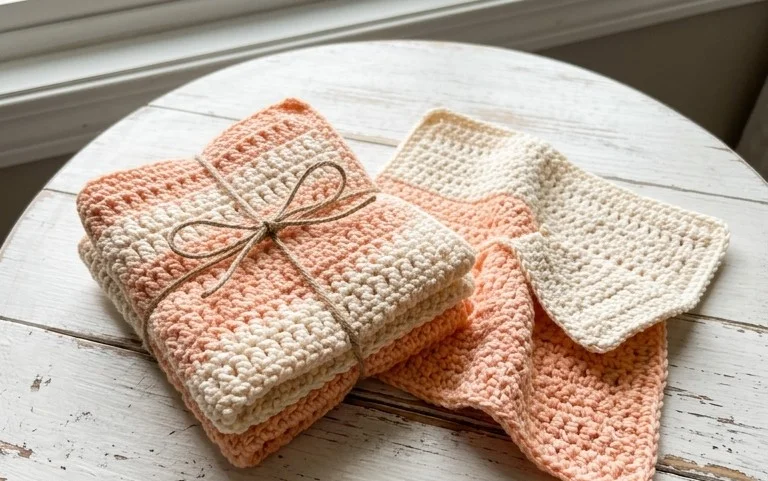
This classic crochet dishcloth is designed with a durable, textured stitch pattern that scrubs effectively without scratching delicate surfaces. It uses a combination of single and double crochet stitches, creating a fabric that is thick enough to hold soapy water but pliable enough to reach into tight corners of glassware. Because it works up in under two hours, it is a rewarding project for an afternoon of practice or for building a matching set for a housewarming gift. The design relies on a simple four-row repeat, allowing you to establish a rhythm quickly without needing to constantly track your progress.
I managed to finish three of these over the weekend using leftover cotton yarn from my stash. They have held up perfectly in the wash and clean my cast iron pans much better than store-bought sponges.
— Sarah, home crafter
Pattern Overview & Skill Level
- Skill Level: Beginner
- Approximate Time: 1.5 to 2 hours
- Construction: Worked in rows from the bottom up, finishing with a simple border
- Finished Dimensions: 8 inches by 8 inches
Materials & Supplies Needed
- Yarn: Worsted weight (#4) 100% cotton yarn, approximately 75 yards. Cotton is preferred for its absorbency and heat resistance.
- Hook Size: 5.0 mm (US H-8) crochet hook.
- Notions: Tapestry needle for weaving in ends, scissors, and optional stitch markers to keep edges straight.
- Safe Yarn Substitutions: Linen or hemp blends of similar weight can be used, though they will produce a stiffer, more abrasive fabric. Avoid acrylics, as they do not absorb water and will melt if used on hot surfaces.
Stitch Guide & Abbreviations (US Terms)
- ch = chain
- sc = single crochet: Insert hook, yarn over, pull up a loop, yarn over, pull through both loops on hook.
- dc = double crochet: Yarn over, insert hook, yarn over, pull up a loop, yarn over, pull through two loops, yarn over, pull through remaining two loops.
- st/sts = stitch/stitches
- sk = skip
- turn = turn your work to the opposite side to begin the next row.
Step-by-Step Pattern Instructions
The foundation chain creates the width of your cloth. Ensure your starting tension is consistent so the edges remain uniform.
Main Body
- Row 1: Ch 30. Dc in the 4th ch from the hook and each ch across. (28 sts)
- Row 2: Ch 1, turn. Sc in the first st and each st across. (28 sts)
- Row 3: Ch 3 (counts as dc), turn. Dc in each st across. (28 sts)
- Row 4: Ch 1, turn. Sc in each st across. (28 sts)
Repeat rows 3 and 4 until the piece measures 7.5 inches from the foundation edge, ending on a row 4 repeat.
Border
To give the dishcloth a finished appearance and prevent the edges from curling, work one round of sc around the entire perimeter.
- Work 1 sc in every stitch along the top edge.
- When you reach a corner, work 3 sc into the final corner stitch to create a smooth turn.
- Work 1 sc evenly spaced along the side edges, placing approximately one sc for every row end.
- Repeat the 3 sc in each corner until you reach the start of the round. Join with a sl st to the first sc and fasten off.
Care & Washing Instructions
- Machine wash in warm water on a gentle cycle to remove oils and food particles.
- Lay the dishcloth flat on a towel to air dry, reshaping it into a perfect square while damp.
- Avoid using fabric softener, as this coats the cotton fibers and significantly reduces the absorbency of the cloth.
Pro Tips & Common Mistakes to Avoid
Consistent tension is vital for a dishcloth, as uneven stitches will create gaps where dirt can collect. If you find your edges are pulling inward, your tension on the turning chains might be too tight. Always place a stitch marker in the first stitch of every row to ensure you do not accidentally skip the final stitch, which often results in a triangular shape rather than a square. Weave your ends in for at least two inches, moving back and forth through the stitches to ensure they do not pull out after repeated washing. Adjusting the size is straightforward: simply add or subtract chains in multiples of two for the foundation, and keep in mind that a larger cloth will require a second ball of yarn.
Frequently Asked Questions
Can I use a larger hook to make the cloth work up faster?
Yes, you can use a 5.5 mm hook to create a looser, more open fabric. This will make the cloth finish faster, but it will be less durable and won’t scrub quite as well as the standard gauge.
Is it okay to sell items made from this pattern?
You are welcome to sell finished items made from this pattern. Please credit the design to this tutorial to help other makers find the instructions.
Why does my rectangle look like a trapezoid?
This usually happens because you are missing the last stitch of each row. Using a stitch marker in the first stitch of every row will help you see exactly where to place your final stitch on the return pass.
Can I change the stitch pattern for a different texture?
You can substitute the dc stitches with half-double crochet stitches for a denser fabric. If you do this, ensure you maintain the same stitch count of 28 stitches per row to keep the cloth square.
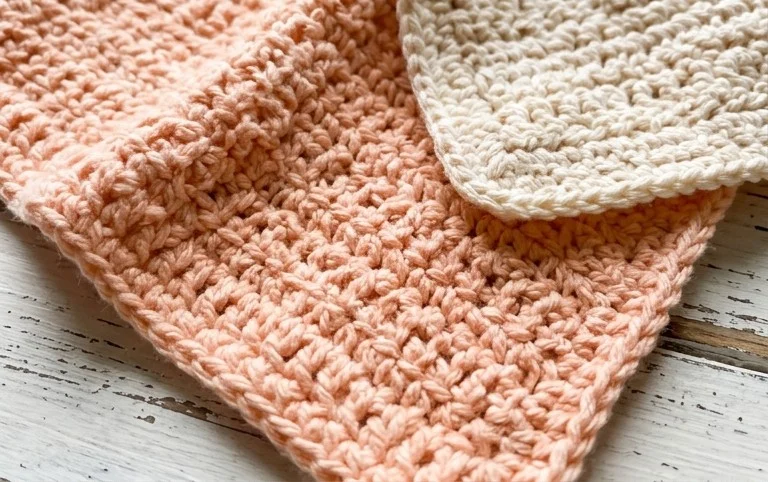
Holding a completed, squishy washcloth in your hands gives a sense of accomplishment that simple store-bought items cannot match. Try alternating stripes of two different pastel cotton colors to create a custom aesthetic for your next nursery gift. Seeing your completed work on social media helps others find the confidence to start their own yarn projects. Feel free to browse the rest of my blog for additional functional designs that help you build your stash of handmade home essentials.