Easy Interlaced Braided Crochet Stitch Free Pattern
Dense ridges create a thick fabric that grips wet counters and wipes clean without bending or losing its shape. This project suits anyone wanting to practice clean lines and uniform tension because the weave provides immediate feedback on your progress. Working with 100% cotton yarn ensures the finished piece stands up to repeated use in a busy kitchen environment. You will find that the rhythm of crossing your stitches helps build muscle memory quickly. It is a satisfying way to turn simple supplies into a functional household tool that lasts for years of daily scrubbing tasks.
Why You’ll Love This Pattern
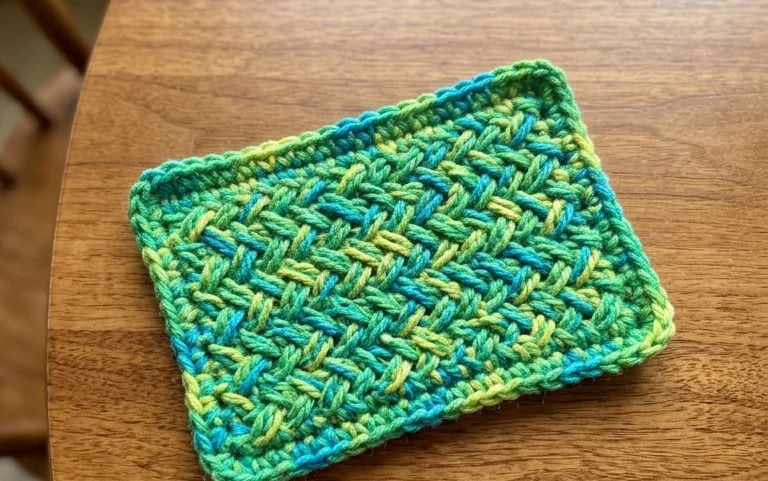
This classic crochet dishcloth relies on the textured grit of the thermal stitch, making it exceptionally effective for scrubbing stubborn spots off cookware. Because the fabric is double-thick, it maintains its structural integrity through many wash cycles without curling at the edges. The repetitive nature of the stitch creates a meditative rhythm, allowing you to complete a durable household staple in a single evening. This project is ideal for using up leftover cotton yarn from larger home decor pieces.
I was surprised by how much thicker and more professional this feels compared to the simple double crochet versions I used to make. It handles grease and dried-on food effortlessly.
— Sarah, home crafter
Pattern Overview & Skill Level
- Skill Level: Beginner
- Approximate Time: 1 to 2 hours
- Construction: Worked in rows with a turning chain to create a dense, double-layered fabric.
- Finished Dimensions & Sizing: 8 inches by 8 inches square.
Materials & Supplies Needed
- Yarn: Worsted weight (#4) 100% cotton yarn, approximately 80 yards. Cotton is necessary for heat resistance and absorbency.
- Hook Size: 5.0 mm (H-8).
- Notions: Tapestry needle for weaving in ends, scissors, and optional stitch markers to keep track of row edges.
- Safe yarn substitutions: You may use a cotton-linen blend for added durability, though this will result in a slightly stiffer fabric. Avoid acrylic yarns, as they are not absorbent and will melt if they contact a hot pan.
Stitch Guide & Abbreviations (US Terms)
- ch = chain
- sc = single crochet
- st/sts = stitch/stitches
- BLO = back loop only
- FL-loop = the front loop of the stitch from the row below (the loop sitting directly in front of the back loop).
- Thermal Stitch: A dense, double-thick stitch pattern created by working into the back loop of the current row and the corresponding unused front loop of the row below.
Step-by-Step Pattern Instructions
Foundation and Setup
Start by creating a foundation chain that is slightly loose to ensure the base edge does not pull inward.
- Row 1: Ch 31. Sc in the second ch from the hook and in each ch across. Turn. (30 sts)
- Row 2: Ch 1 (does not count as a stitch). Sc in the BLO of each st across. Turn. (30 sts)
Main Body
The thermal stitch begins here by connecting the current row to the foundation row to create the double thickness.
- Row 3: Ch 1. Insert hook into the BLO of the first st of the current row AND the remaining front loop of the stitch from Row 1. Yarn over and pull through both, complete a sc. Repeat across all stitches. Turn. (30 sts)
- Rows 4–30: Ch 1. Insert hook into the BLO of the current stitch and the unworked loop from two rows below. Complete a sc. Repeat across. Turn. (30 sts)
Finishing
After reaching your desired square length, cut the yarn leaving a 6-inch tail. Pull the tail through the final loop to secure. Use a tapestry needle to weave the end back and forth through the dense fabric to hide it completely.
Care & Washing Instructions
- Machine wash on a warm, gentle cycle with like colors to prevent dye bleeding.
- Tumble dry on low heat or lay flat on a drying rack to maintain the shape of the square.
- Reshape the cloth by pulling the corners gently while it is slightly damp if it begins to lose its square geometry.
Pro Tips & Common Mistakes to Avoid
- Maintain a consistent tension throughout the project; if your stitches are too tight, the thermal stitch will become difficult to work into on subsequent rows.
- Use a stitch marker on the first stitch of every row to ensure you do not accidentally drop stitches at the edges, which would lead to an uneven, trapezoidal shape.
- Weave your ends into the body of the fabric rather than just along the edge; the thickness of the thermal stitch hides tails perfectly without requiring extra knots.
- Adjust the size by changing the starting chain count; remember that each additional inch in width will require approximately 10 extra yards of yarn.
Frequently Asked Questions
Can I use a different yarn weight for this dishcloth?
While you can use DK or bulky weight yarn, you must adjust your hook size to match the yarn label. Note that changing the weight will significantly alter the density of the final fabric and the finished dimensions.
Is this project suitable for a total beginner?
Yes. Although the thermal stitch looks complex, it only requires the basic single crochet maneuver. Once you establish the rhythm of inserting your hook into the two specific loops, it becomes a very repetitive and easy process.
How do I prevent the edges from looking wavy?
Ensure you are not adding extra stitches at the end of your rows. Count your stitches after every row to confirm you still have 30. A consistent tension also prevents the edges from stretching out.
Am I allowed to sell the dishcloths I make from this pattern?
You are welcome to sell finished items made from this pattern in small quantities. Please provide credit to this design when listing your products online or at craft markets.
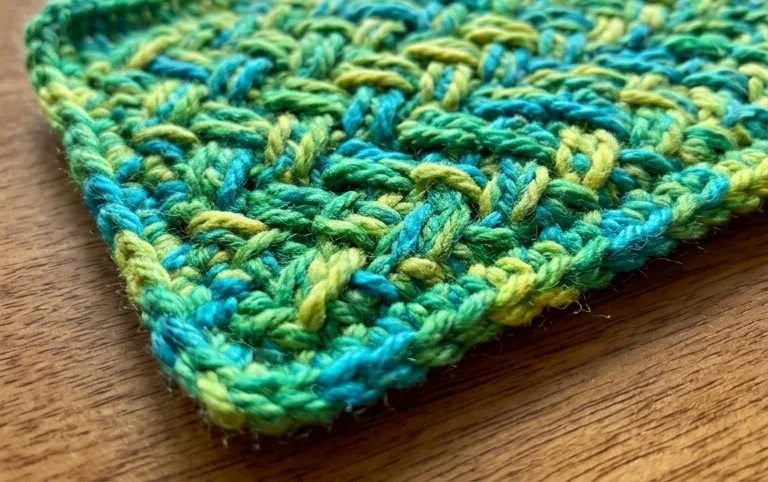
Your new dishcloth brings a refined texture to your sink area and serves as a hard-working tool for years of daily tasks. If you want to change the look, try using a variegated cotton yarn to make the braided lines pop against a solid background. Please share a photo of your work on Instagram so others can see how your colors turned out. Feel free to browse through my other free patterns for more ways to stock your home with handmade essentials.