Easy Puff Stitch Crochet Hat: Free 1-Hour Pattern Guide
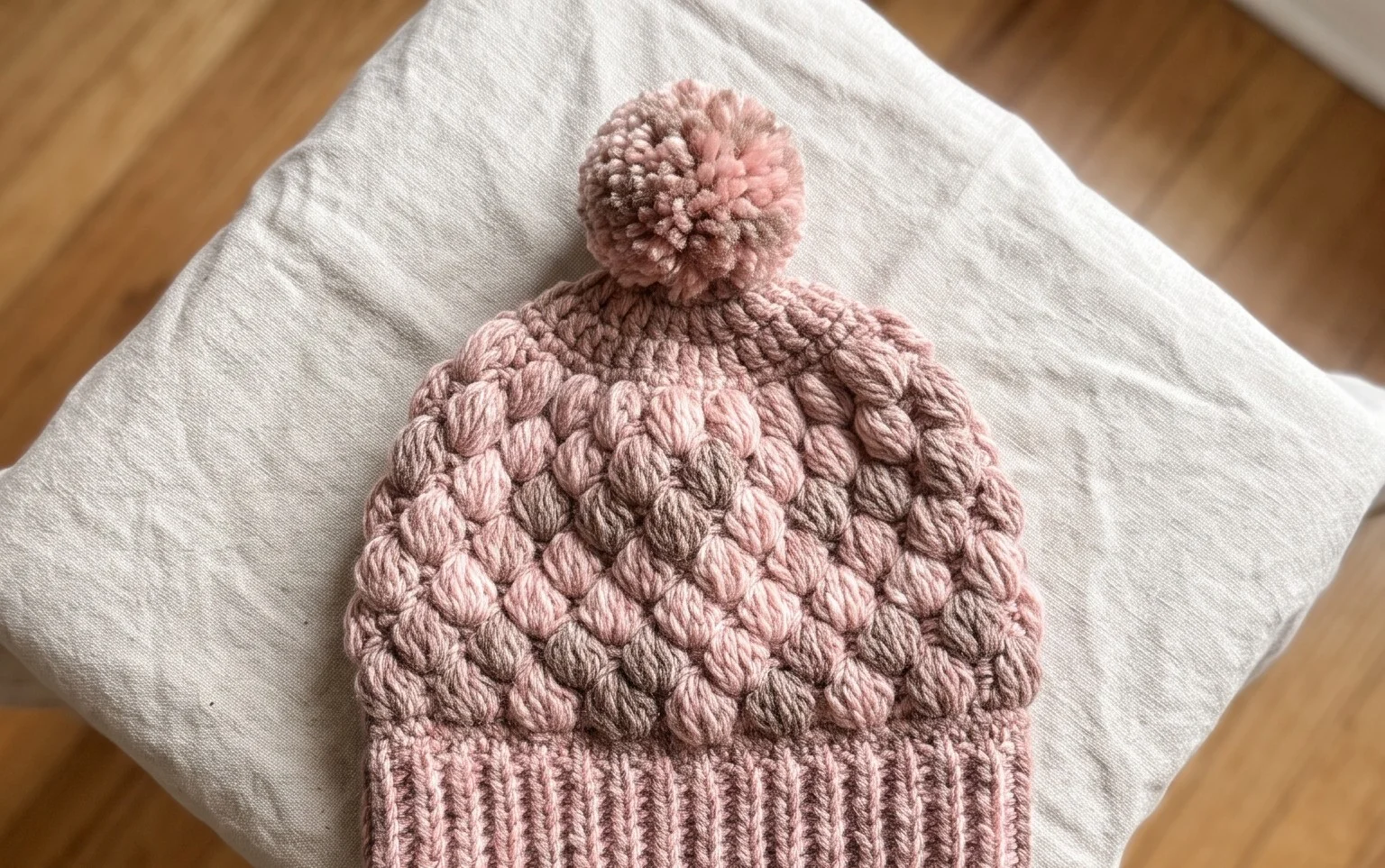
Soft yarn and raised puff stitches give this hat a plush texture that feels warm without looking bulky. The finished piece has a cozy, handmade look that suits everyday winter outfits, thoughtful gifts, and anyone who likes a little extra texture in their accessories. Puff stitches take a bit more yarn than plain stitches, but their rounded shape makes each row satisfying to watch grow. This pattern is approachable for beginners who know the basic crochet stitches and are ready to try a new technique. You’ll learn how to form even puffs, keep your stitch count steady, and shape the hat so it sits comfortably. The one-hour estimate is a guide; your yarn, hook, and pace may change the timing, so enjoy the rhythm rather than rushing the last rows.
Why You’ll Love This Pattern
A firm cotton dishcloth works well for wiping counters, washing dishes, and drying small items. This beginner-friendly pattern uses single crochet throughout, with every other row worked through the back loop to make gentle ridges. The ridges add texture without requiring a special stitch or complicated counting.
The cloth is worked flat in one piece, so there is no seam to sew. A 36-stitch width and 36-row length make a practical rectangle, and the straightforward repeat is easy to pick up again after a break. Use one color for a simple cloth or change colors at row ends if you are comfortable weaving in extra tails.
The back-loop rows gave my dishcloth a nice texture, and I could finish a few rows at a time while watching TV.
— Mara, sample crocheter
Pattern Overview & Skill Level
- Skill Level: Beginner. You need to chain, single crochet, and turn rows.
- Approximate Time: 3–4 hours, depending on your pace and how often you stop to check your stitch count.
- Construction: The dishcloth is worked flat from the foundation chain, back and forth in rows. Alternating regular single crochet and back-loop single crochet creates the ridged surface.
- Finished Dimensions & Sizing: About 28 × 21.5 cm (11 × 8.5 in) after washing and drying flat. Dimensions can vary with yarn, hook, and personal tension.
Materials & Supplies Needed
- Yarn: Approximately 45–55 g, or 90–110 yd (82–101 m), of worsted-weight (#4) 100% cotton yarn in one color. Cotton absorbs water and tolerates regular washing.
- Hook Size: 5.0 mm / H-8 crochet hook. If your fabric feels stiff, try a 5.5 mm / I-9 hook; if it feels loose and floppy, try a 4.5 mm / 7 hook.
- Notions: Tapestry needle for sewing in yarn ends, scissors, and a ruler or tape measure. A locking stitch marker can help mark the first stitch of each row.
- Substitutions: A cotton-linen blend can be used, though it may feel less soft and can drape differently. Avoid acrylic for a dishcloth that needs to absorb water. A thicker cotton yarn will make a larger, denser cloth and use more yarn; a thinner yarn will make a smaller cloth with a lighter texture.
Gauge: About 13 stitches and 17 rows in 10 cm (4 in) of single crochet, measured after washing and drying. Gauge is a guide rather than a reason to force your hands: make a small swatch if the finished size matters, then change hook size to get close.
Stitch Guide & Abbreviations (US Terms)
- ch: Chain.
- sc: Single crochet. Insert the hook in the indicated stitch, yarn over, pull up a loop, yarn over, and pull through both loops.
- st / sts: Stitch / stitches.
- BLO: Back loop only. Work the stitch through the back loop of the stitch top, leaving the front loop unworked. This forms a raised ridge.
- turn: Turn the work so the opposite side faces you for the next row.
The turning chain does not count as a stitch in this pattern. Work the first single crochet into the first stitch of each row, not into the base of the turning chain.
Step-by-Step Pattern Instructions
Dishcloth
- Foundation: Ch 37. Keep the chain loose enough for your hook to enter easily.
- Row 1: Sc in the second ch from the hook and in each ch across. Turn. (36 sts)
- Row 2: Ch 1, sc in each st across. Turn. (36 sts)
- Row 3: Ch 1, sc in BLO of each st across. Turn. (36 sts)
- Rows 4–35: Repeat Rows 2 and 3 sixteen times, ending with a BLO row on Row 35. Turn after each row. (36 sts per row)
- Row 36: Ch 1, sc in each st across. Fasten off, leaving a tail long enough to weave in. (36 sts)
Check the edges as you work. Each row should have 36 single crochets, and the turning chain should remain outside that count. If your edge starts to narrow, count the stitches before continuing; a missed first or last stitch is a common cause.
Finishing
Thread the yarn tail onto a tapestry needle. Weave it through several stitches on the wrong side, change direction, and pass through a few more stitches to secure it. Trim the tail close without cutting into the cloth. Weave in the starting tail the same way. Wash the dishcloth according to the yarn label, then lay it flat and gently smooth the edges into shape.
Care & Washing Instructions
- Wash cotton in warm water, up to 40°C (104°F), unless the yarn label gives a lower limit.
- Dry flat or tumble dry on low heat if the yarn label allows it; reshape the cloth while it is damp.
- Block by smoothing the damp cloth to its finished measurements and letting it dry flat; follow the yarn label if the fiber content is different.
Pro Tips & Common Mistakes to Avoid
- Keep the edges even: Use a relaxed, consistent tension in the foundation chain. If it is much tighter than the rows, the bottom edge may pull inward; try a larger hook just for the chain if needed.
- Count as you go: Check for 36 stitches at the end of each row. A stitch marker in the first stitch can make it easier to spot the correct place to work the final stitch on the next row.
- Hide ends securely: Weave each tail through the back of several stitches, then change direction. This helps keep ends from working loose during washing.
- Adjust size with care: To make the cloth wider, add chains to the foundation, keeping the total chain count one more than the desired number of stitches. Add rows for extra length. A larger cloth uses more yarn, and a larger hook or thicker yarn changes both the dimensions and fabric density.
Frequently Asked Questions
Can I use a different yarn fiber?
Yes, but cotton is a good choice because it absorbs water and is easy to wash. A cotton-linen blend can also work. Acrylic is less absorbent, so the finished cloth may be better suited to light cleaning than dishwashing.
How can I make the dishcloth smaller or larger?
Change the foundation chain to adjust the width and add or remove rows to adjust the length. The chain should be one stitch longer than the number of single crochets you want in Row 1. Changing yarn weight or hook size will also affect the finished dimensions and yardage.
Is this pattern suitable for a first crochet project?
Yes, if you are comfortable making a chain and single crochet. The back-loop rows use the same single crochet stitch, but you insert the hook in only the back loop. Count each row to catch missed edge stitches early.
Can I sell dishcloths made from this pattern?
Check the designer’s terms before selling finished items, and follow any requirements for pattern credit or product descriptions. Do not assume that permission to make an item also allows you to copy or sell the written pattern.
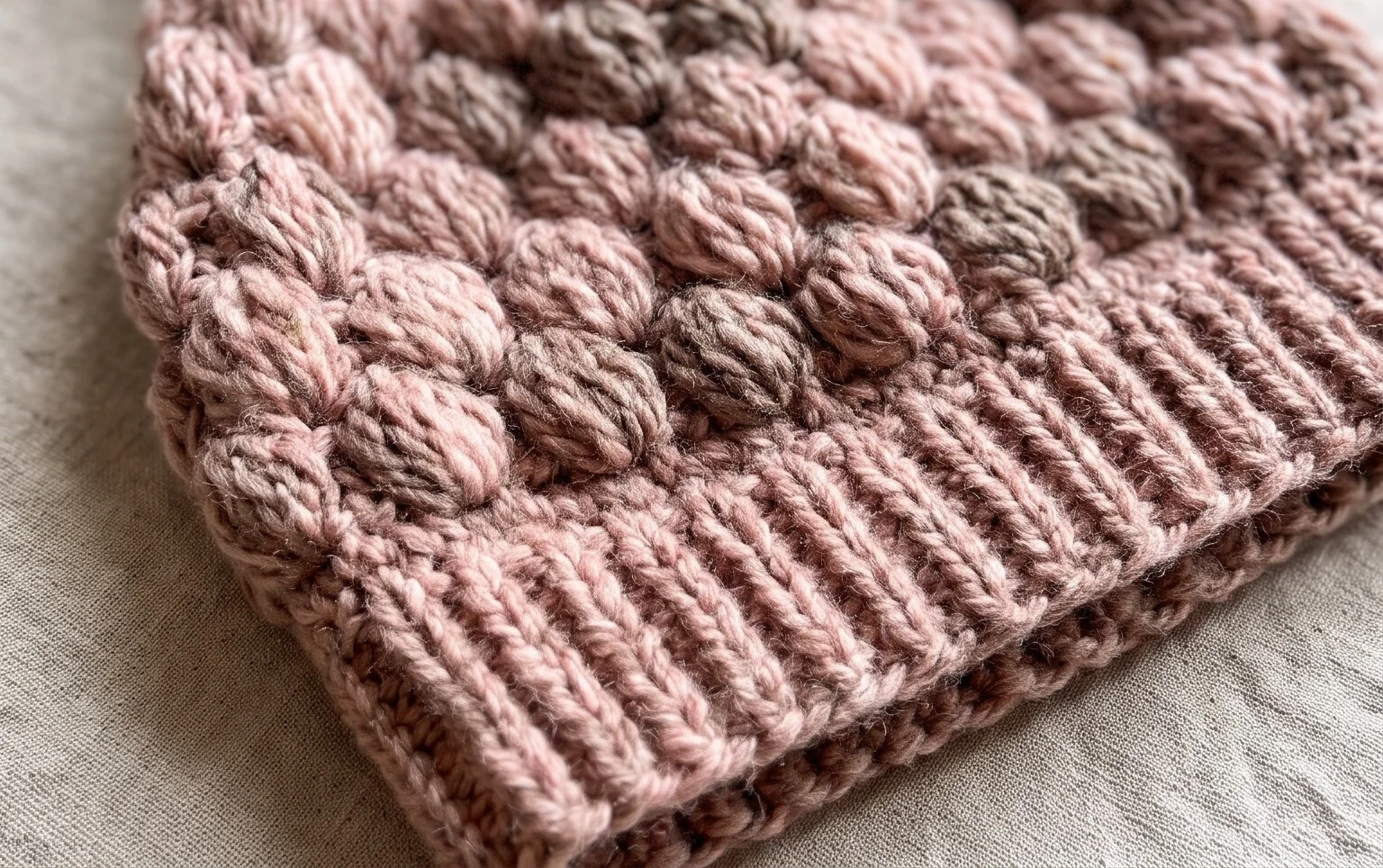
A finished puff-stitch hat has a soft, bumpy texture that makes a simple cold-weather accessory feel personal and fun to wear. Try making yours in a single neutral shade for everyday use, or choose a bright color that stands out against a winter coat. If you adjust the size, check the fit as you work so the hat sits comfortably without stretching too tightly. Share a photo of your finished hat on Pinterest or your favorite social media platform; it’s always nice to see how different yarn colors change the look. When you’re ready for another relaxing project, explore more free crochet patterns on the blog and pick one that suits your next quiet afternoon.