Wearable Crochet Christmas Tree Earrings for Holiday Cheer
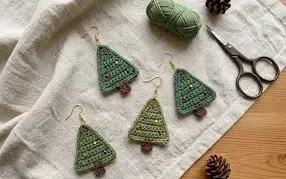
A few yards of green cotton yarn become tiny tree-shaped earrings with a neat, stitched texture and a festive look. These lightweight decorations suit beginners who are comfortable with basic crochet, and they make a thoughtful handmade gift for friends, teachers, or anyone who enjoys wearing a little holiday color. The small scale means you can finish a pair without setting aside a whole weekend, while shaping the tree gives you a chance to practise keeping stitches even as the piece widens and narrows. In this pattern, you’ll learn how simple crochet stitches build the tree shape and how to finish the pieces for wearing with earring findings. You can keep the design classic in green, add a small bead as a tree topper, or choose colors that match your own holiday style. A pair also fits neatly into a gift pouch or handmade ornament bundle.
Why You’ll Love This Pattern
A firm cotton washcloth is useful at the kitchen sink, in the bathroom, or tucked into a small gift basket. This beginner-friendly version uses simple single crochet stitches worked in rows, so you can focus on keeping the edges straight rather than managing a complicated stitch pattern.
The 30-stitch width makes the cloth easy to handle, and the repeated rows are a good way to practise even tension. One ball of worsted-weight cotton usually provides enough yarn, with some left over for another small project. Cotton also absorbs water well and holds up to regular washing.
The rows were easy to keep track of, and the finished cloth feels sturdy without being stiff. I made mine during a few evenings and use it at the sink every day.
— Mara, sample-maker note
Pattern Overview & Skill Level
- Skill Level: Beginner. You need to know how to chain and single crochet.
- Approximate Time: About 2–3 hours, depending on your pace and how often you stop to check your stitch count.
- Construction: A flat rectangle worked back and forth in rows, then finished by weaving in the starting and ending tails. No seam or edging is required.
- Finished Dimensions & Sizing: Approximately 8 inches wide by 7.5 inches tall after washing and drying flat. The size can vary slightly with yarn, hook, and tension.
This pattern is written for a small everyday washcloth. The first row is worked into the chain, and each later row has 30 stitches. Turn at the end of every row; the turning chain does not count as a stitch.
Materials & Supplies Needed
- Yarn: About 45–55 yards of worsted-weight (#4) cotton yarn. A solid or lightly variegated color makes the rows easy to see. Choose 100% cotton for a sturdy, absorbent cloth.
- Hook Size: 4.0 mm / G-6 crochet hook.
- Notions: Tapestry needle for weaving in ends, scissors, and a ruler or measuring tape.
- Substitutions: A cotton and linen blend can make a slightly drapier cloth. A cotton-acrylic blend may feel softer but can be less absorbent. If you use a different yarn weight, the finished dimensions and yardage will change; check the label and make a small gauge swatch before starting.
Use a hook that gives you a dense but flexible fabric. If the stitches feel hard to insert the hook into, try a 4.5 mm hook. If the cloth looks loose or develops large gaps, try a 3.75 mm hook. Changing hook size also changes the finished measurements.
Stitch Guide & Abbreviations (US Terms)
- ch = chain.
- sc = single crochet.
- st = stitch.
- sts = stitches.
- rep = repeat.
- turn = rotate the work to begin the next row.
To make a single crochet, insert the hook into the indicated stitch, yarn over and pull up a loop, then yarn over and pull through both loops on the hook. The turning chain at the start of each row does not count as a stitch in this pattern.
Gauge: 15 sc and 16 rows measure about 4 inches square. Gauge is a useful guide rather than a reason to force your stitches; the cloth remains useful if yours is a little larger or smaller. A noticeably loose fabric may wear faster.
Step-by-Step Pattern Instructions
Washcloth
- Foundation: Ch 31. Keep the chain relaxed so the bottom edge does not pull inward.
- Row 1: Sc in the second ch from the hook and in each ch across. Turn. (30 sts)
- Rows 2–30: Ch 1, sc in each st across, turn. The ch 1 does not count as a stitch. (30 sts each row)
After Row 30, check that the rectangle measures close to 8 inches wide and 7.5 inches tall. If it is shorter, you can work a few more rows, keeping 30 stitches in each row. If it is already the height you want, finish without adding rows.
Finishing
- Cut the yarn, leaving a tail about 6 inches long, and pull the tail through the loop on your hook to secure it.
- Thread the tail onto a tapestry needle. Weave it through several stitches on the wrong side, change direction, and pass it through a few more stitches so it stays put during washing.
- Weave in the foundation tail in the same way. Trim the remaining ends close to the fabric without cutting into a stitch.
- Wash and dry the cloth according to the yarn label, then lay it flat and square the corners while it is damp.
Care & Washing Instructions
- For 100% cotton yarn, wash with similar colors in warm water, up to 40°C, unless the yarn label gives a lower limit.
- Dry flat for a neat shape, or tumble-dry only if the yarn label allows it; high heat can make cotton shrink.
- Reshape the damp cloth by smoothing its edges and corners on a flat surface; follow the yarn label if you used a blend or another fiber.
Pro Tips & Common Mistakes to Avoid
- Keep your turning chain loose and make the first single crochet in the first actual stitch. Tight turning chains can pull the sides inward, while accidentally skipping the first stitch makes the cloth narrower on every row.
- Count the stitches at the end of each row, especially during the first few rows. A row should have 30 single crochets; the turning chain is not included in that count.
- Leave a long enough tail to weave in securely. Pass the needle through the backs of several stitches, change direction, and avoid pulling so tightly that the edge puckers.
- To make the cloth wider, start with more chains and work one fewer single crochet than the chain count. To make it taller, add rows. A larger cloth uses more yarn, while a smaller hook may make the fabric denser and slightly reduce its dimensions.
Frequently Asked Questions
Can I use a different kind of yarn for this washcloth?
Yes, but cotton is a practical choice because it absorbs water and tolerates frequent washing. A cotton-linen blend may feel softer and drape more. Acrylic can be less absorbent, and a different yarn weight will change the finished size and amount of yarn needed.
How can I make the washcloth larger or smaller?
For a wider cloth, change the starting chain and keep one fewer single crochet than the number of chains. For a taller or shorter cloth, work more or fewer rows. Check the dimensions as you go, since stitch size and yarn weight affect the result.
Is this pattern suitable for a first crochet project?
Yes. It uses chains and single crochet in straight rows, with no shaping or joining. The main challenge is maintaining 30 stitches across every row, so count before turning until the sides look even.
Can I sell washcloths made from this pattern?
Check the designer’s terms before selling finished items. If permitted, describe the yarn and care instructions accurately, and do not claim that a handmade cloth has special properties beyond those of its materials.
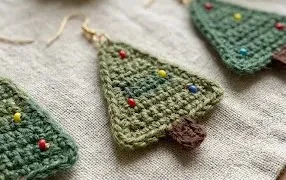
A finished pair of little crocheted trees brings a cheerful handmade touch to holiday outfits, and the compact size makes them satisfying to complete in a quiet evening. For a simple variation, use red or cream yarn instead of green, or try a finer yarn for a more delicate pair. Share a photo of your earrings on Pinterest or your favorite social media platform so other makers can see the colors you chose. If you enjoyed this small project, explore the blog for more free crochet patterns, including other quick gifts and seasonal makes you can work up with a small amount of yarn.